
September 2026: Habits
What do you like to do with your free time? In my introductory bio I usually put a few of my hobbies, but I am well aware that I am a dabbler. I’ll try something, enjoy it, invest in it, do it religiously for six months, and then not touch it for a decade or so. My craft room alone attests to all the little things I’ve tried, liked, but just didn’t stick around as a regular part of my life.
Currently, I am an avid reader. I’m relearning the valuable lesson not to start a mystery novel of under 300 pages after 10 p.m. if I’m planning on going to bed on time. Did a read a bunch last year? No. Will I next year? I don’t know. I’ve returned to reading so many times as my top hobby that it is the closest to a lifelong habit I’ve got. Other things, like adult coloring, were short lived excursions.
Sometimes our faith is like that. We get into the good habit of gathering in community for Sunday School and worship, but then life changes and suddenly we are only showing up for Easter, Christmas, and the occasional luncheon. In a time of trial and tribulation, we might pray faithfully every day, but when the thing for which we were interceding is resolved, we might fall away from our prayer life.
It is perfectly reasonable and normal to have seasons in which we do different things to help us grow in our faith. Reading Scripture, praying, studying in a group, or acts of service are some of the ordinary means of grace. Ordinary means of grace are ways that work for most people to help them draw closer to God. Our faith journeys are not unlike any efforts made in the gym: consistency is key to success.
What is a good habit for your faith journey that you would like to try? What will help you consistently draw closer to God today? The answers to these questions will likely change over the years, but the more often you seek the answers to where Christ is calling you, the more often you may see fruit!
August 2026: Regrets
A few weeks ago I was invited to participate in a big cleanout of the church’s kitchen. We had lots of items taking up space that weren’t useful on a regular basis and others that we didn’t want to donate or toss that were being stored in the prime spots. It got me to thinking about how sometimes if you don’t use things, they go bad. Did you know spices have expiration dates?
Recently I came into possession of a set of the skin tone Sharpie markers. A set of twelve markers that purports to cover a good number of skin tones, though they definitely do not make a claim that it is all. Alas, because these were second hand, two of the markers were already all dried up before they were used. For a free item, not a gift, not bad. No complaints. But it added to that thought of not using something that would have been useful. Could have been.
We can spend a lot of time thinking about the could have beens, what ifs, or should haves. Regrets is the best way to talk about these things, but what if the regrets have to do with things you’ve invested time and money into? What if you’ve carefully packed them in boxes for storage, paid for a storage unit, or moved them across the country… twice? This is a question about material things, but also about what we are holding onto in our spirits.
Christ invites us to set down all that burdens us and be made new. What are you holding onto? How is God calling you to let go?
And the one who was seated on the throne said, “See, I am making all things new.” Also he said, “Write this, for these words are trustworthy and true.”
Revelation 21:5 NRSVUE
July 2026: Annual Conference Part II
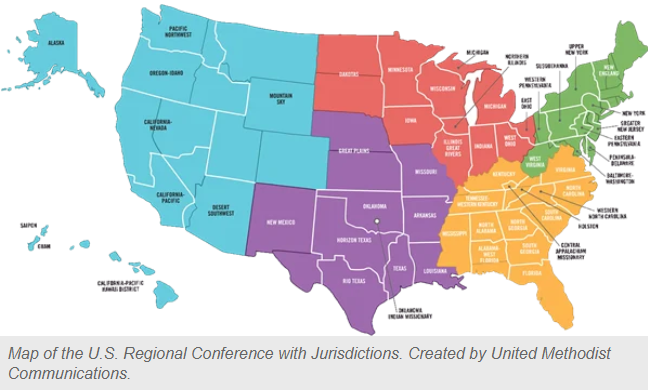
So, we had made it to the Horizon Texas Conference last month. Surely the structure of the church continues on from there in an orderly and reasonable fashion, right? But what about those big changes that were voted on in 2025? What is a region?
It used to be more complicated. Outside the US, the conferences were gathered into seven central conferences: Africa, Central and Southern Europe, Congo, Germany, Northern Europe, Philippines, and West Africa. Inside the US, there are five jurisdictions: North Central Jurisdiction, Northeastern Jurisdiction, South Central Jurisdiction (that’s us!), Southeastern Jurisdiction, and Western Jurisdiction. Jurisdictions were essentially equal with central conferences in powers and duties. Each were able to elect their own bishops and set some standards. By the end of 2028, this will not be how we are organized.
What has changed? Now we are organizing into nine regional conferences: East Africa, Mid Africa, Southern Africa, West Africa, Philippines, Central and Southern Europe, Germany, Nordic-Baltic-Ukraine, and United States. There are many hopes with this new structure including more equality for our siblings in Christ around the world while still uniting together in God’s holy name. It also simplifies the organizational structure. Slightly.
For now regions will serve as the largest organizational piece of the United Methodist Church. Until we colonize another planet that will likely remain true, but who knows what the future holds.

June 2026: Annual Conference Part I
What a joy it is to gather with others across our connection for Annual Conference. This year we were in Wichita Falls and met at the convention center for most activities. With 1600 people (or more) gathered, it was a nice big crowd.
As I prepared for Annual Conference, I realized that not everyone knows about how the United Methodist Church is structured. To be fair, we have a whole class in seminary about our polity (the form of government of a religious denomination) which helps us as pastors better understand the way in which our church functions. There is additional news, the structure is changing based on some of the voting that occurred at General Conference. But let’s look at some of the basics. (This is a part I!)
We start with you! You are a member of a local church. That church is governed by a charge conference, also called a council or board. A pastoral charge may be a single local church or more. As I am appointed to both FUMC Mineral Wells and Palo Pinto UMC, this is a multi-point charge. Each local church still has their own charge conference even if the same pastor serves multiple churches.
From the local church we are a part of the West District. Our District Superintendent is currently the Rev. Tom Long. There are ten districts across the Horizon Texas Conference. That is our Annual Conference, a gathering of members from across the body.
How much of this did you already know? More in Part II next month!
Photo is a deer who came to visit at FUMC Mineral Wells!

May 2026: Windows
As we’ve started into new Bible studies at both congregations, I’ve found myself wanting to revisit a concept regarding Scripture that did not originate with me, but I find very helpful when I want to think about Scripture, truth, and literal meaning. It’s the window into Scripture. How you read and understand Scripture often shapes how you live out what you’ve read.
The spectrum of Scripture tends to be a literal understanding or a more allegorical understanding where symbolism and meaning have greater value than historical proof or factual information. I won’t say either is a better way to understand Scripture and if you go all the way to either extreme, there are complications. For instance, with a more literal understanding, you start with there being two different accounts of creation in Genesis 1-3. Scripture even says it is another account of creation and the two don’t quite match. Truth is evident, but factual information may be lacking. If you go entirely allegorical, then what happens to the meaning behind Christ’s birth, life, death, and resurrection. Neither is perfect and most people are somewhere away from the edges.
Enter in the idea of the window: when we read the Scriptures, we get a glimpse into a different time and place, like looking through a window. There is additional meaning in the context of when it was written, who wrote it, why it was written, or an action taken in the verses that had greater significance to the people who first read it. Context does matter and helps us better understand what is happening in those verses. But much like a window in the dark, Scripture also acts as a mirror that reflects back to us. The history, the context, the very literal interpretations are still there, but we are often formed in our faith by the reflection we see that impacts us here and now.
Have you ever pondered this one before? Are you on one of the extremes? May God bless your reading and understanding either way.

February 2026: Help!
Are you someone who is willing and able to ask for help? Think about that one for a moment. Do you truly allow others to see you if you are vulnerable or weak or unable to finish a task?
We all need a little assistance sometimes, that much is true, but being able to give assistance to someone else is, for many, the easier of the two.
Helping someone else can make you feel needed and useful, adds to your sense of purpose. God has given you talents and resources and know-how and you can use all of those things, plus some practical experience, to help out a fellow human. What a blessing to be a blessing!
But if you are the one who has to ask for assistance sometimes words like failure, incapable, incompetent, ignorant, useless get bandied about. I hope that you would speak to yourself more kindly than that if you are unable to accomplish a task by yourself. If you heard a sibling in Christ expressing this opinion of themselves, you’d probably try to correct them! Even in our worst moments, that is not how God speaks to us.
Asking for help is not my forte. It is a skill I am continuing to learn. Each time I think I’ve learned the lesson, I find myself back in a place where I’m going to injure myself trying to do something beyond the scope of one person. Or squeezed behind an appliance on the verge of tears, covered in grime, and using all the swear words I know (I know plenty).
It is my well informed theological theory that God wants us to ask for help when we need it. Psalm 121 reminds us that God will send that help. Asking for help is trusting God to assist us in our times of need. May God send you all the help you need… and may you ask for help!

March 2026
Recently I’ve had a few opportunities to ponder the question of whether I, a modern, mostly internet-based sort of person, could live well if my primary sources of engagement and entertainment were suddenly, temporarily, and with only minor warning inaccessible to me. Basically, what do you do to pass the time when you live alone and the power is out? Not a “what if” we spend a ton of time pondering, but the ice storm from a few weeks ago started my pondering… and a day without power while I could see the linemen working from my back window answered it.
Sometimes when we have a question, we never get an answer. Life is full of mysteries and not everything is answered to our satisfaction. We can be like a dog with a bone if we continue to pester, ask, or investigate. Have you ever heard someone say “if only God would tell me what to do” or “when will God answer my prayer”? Sometimes the non-answer is the answer. There are many questions we ask that we think are new or specific to our individual lives and circumstances that actually already have an answer in Scripture if only we know where to look.
Someone attempting to point out that Scripture doesn’t help with every situation- it can’t tell you how to build a table clearly hadn’t looked at the Scripture in Exodus 25 that gives fairly specific instructions on how to build a table. Scripture contains everything necessary for salvation, but it also includes a great deal of helpful wisdom. The next time you find yourself waiting on an answer from God, perhaps you’ll consider seeing if the question has already been answered.
February 2026
A primer on love? In February? Could it get more tropey and cliché? Yes, but only if we limit our view of love to romance.
One of the biggest (and in my humble opinion) most credible critiques of Scripture is that it is, in fact, a translation. Much of the original intent and meaning of the words is lost in translation at times. As a case in point… the word love. In English we use love to describe our favorite snacks, our mothers, and our shoes. Others lists include a sports team, a movie star, or a song. There is lots of love to go around. I’m not anti-love, but it is a vast and expansive word that does not fit neatly into a box insofar as connotation and denotation go. Yes, dictionary.com will give you a definition… but with 14 commonly used meanings I’ll stick with the validity of my point: in Scripture love used to have more clearly defined meanings. Maybe.
In Greek philosophy, which would have heavily influenced the language of the Gospels, there were at least six different, distinct types of love. They are agápē, érōs, philía, philautía, storgē, and xenia. And in good Christian fashion, we even further defined these within the church. Agape is not translated as self-less love to the Greeks, but in the church we talk about it as love of God for humanity and when human love for another reflects God’s love for humanity.
In this month of love (or maybe just one holiday that encourages the consumerism side of romance), I hope that God’s love is evident in your life. And that no matter what you call it, you’re doing your best to share it with others.

January 2026
In a recent sermon I talked about God’s plans for us. There is a definite connection in my understanding of what God’s plan is for our lives and Jeremiah 29:11. Although these words were written in a different time for a different people, I firmly believe that they reflect what we see throughout Scripture about how God loves us, cares for us, guides us, and wants the best for us.
Which is also why I find myself feeling a little bit convicted by the Holy Spirit. I can preach healthy, happy, and holy, but am I truly living it? I’d like to think so, but there’s some concrete evidence to the contrary- namely two bouts of illness last year that put me out of commission. Two out of three ain’t bad, but I want to do better still. It’s hard to serve a congregation when a doctor’s orders include “avoid contact with other people” and “quarantine”. And yes, I’ve been reminded by many loving people, Scripture, and beyond that I should give myself a little bit more grace about these things. The guilts been lifted, but I still find myself asking the question of what can I do differently next time so this doesn’t happen again. If I want to be healthy, what habits in my life need to change?
As we enter into this new year, before we get to the season of Lent, which is a season of self-reflection and change, what in your life can we pray will be transformed by the love of Christ? How can we help you on your journey to be happy, healthy, and holy? May God be with you, grant you strength, and help guide you in paths that lead to life.
For surely I know the plans I have for you, says the Lord, plans for your welfare and not for harm, to give you a future with hope. Jeremiah 29:11 NRSVUE

November 2025
And last, but not least, the final B. Becoming. What does it mean to become something or someone? How do we understand this with a Christian point of view? What are we supposed to do to become followers of Christ?
Okay, I’ll admit. Some of those questions are easier to answer than others. You can look up a definition for what it means to become- a connotation, but for the denotation, the Christian lens, you may not want to limit yourself. It makes it feel like being a “good” Christian requires a checklist. That would make it seem like there’s a recipe for a perfect Christian life.
As someone who bakes, occasionally, and has baked a great deal before, I feel like there’s a good analogy here. At what point in the creation process does a pie become a pie? Or does bread become bread? Can dough be bread? What if you make substitutions? What if we are always meant to be more like Christ, day by day? The process would never end. After all, we are not bread. We are God’s beloved children. Precious creations made in the image of God.
And maybe that’s the idea. That as we continue to strive to be like Christ, we know it is possible to be perfected in love in this lifetime, but we also know that it requires a continuous renewal, reconnection, and reorientation towards God. That although we name ourselves as Christians we also know that as disciples we are always, with the help and power of the holy Spirit, with Christ’s righteousness, and God’s grace becoming who God would have us to be. Let us not be stagnant in our faith.

October 2025
Last month I touched on belonging to the body of Christ. To continue with the next B, we must discuss believing.
Unfortunately, every time I start a sentence with “do you believe” my brain starts singing the song by Cher. Neither helpful nor very theological. Especially as someone who believes so deeply in the steadfast and unending love of God. There is no life after love because God’s love never ends.
But asking what it means to believe is another story. You can feel it deep in your gut, you can logic your way to it, you can be overwhelmed by the emotions related to it… but to believe in something? What does that take?
Good question. Not sure if I have a single, good, clear answer. It does seem to me as if believing is tied to faith. And to have faith can be understood as living as if God’s promises have, are, and will come true. It means trusting in God’s promises as real.
An example of this might be in regard to the promises about the Holy Spirit. The incarnate Christ promised the disciples that someone was coming to be with them. To guide, to lead, to show them how to continue on in the way. Do you feel the presence of the Holy Spirit? Do you have to see or feel that presence to know it is real? We’re supposed to believe without proof. Huh. Tricky stuff. Trusting in God does come with prior knowledge and evidence that God’s love, presence, and salvation are real. So does believing ask us to continue to trust in God no matter what happens? For now at least, I think so.
September 2025
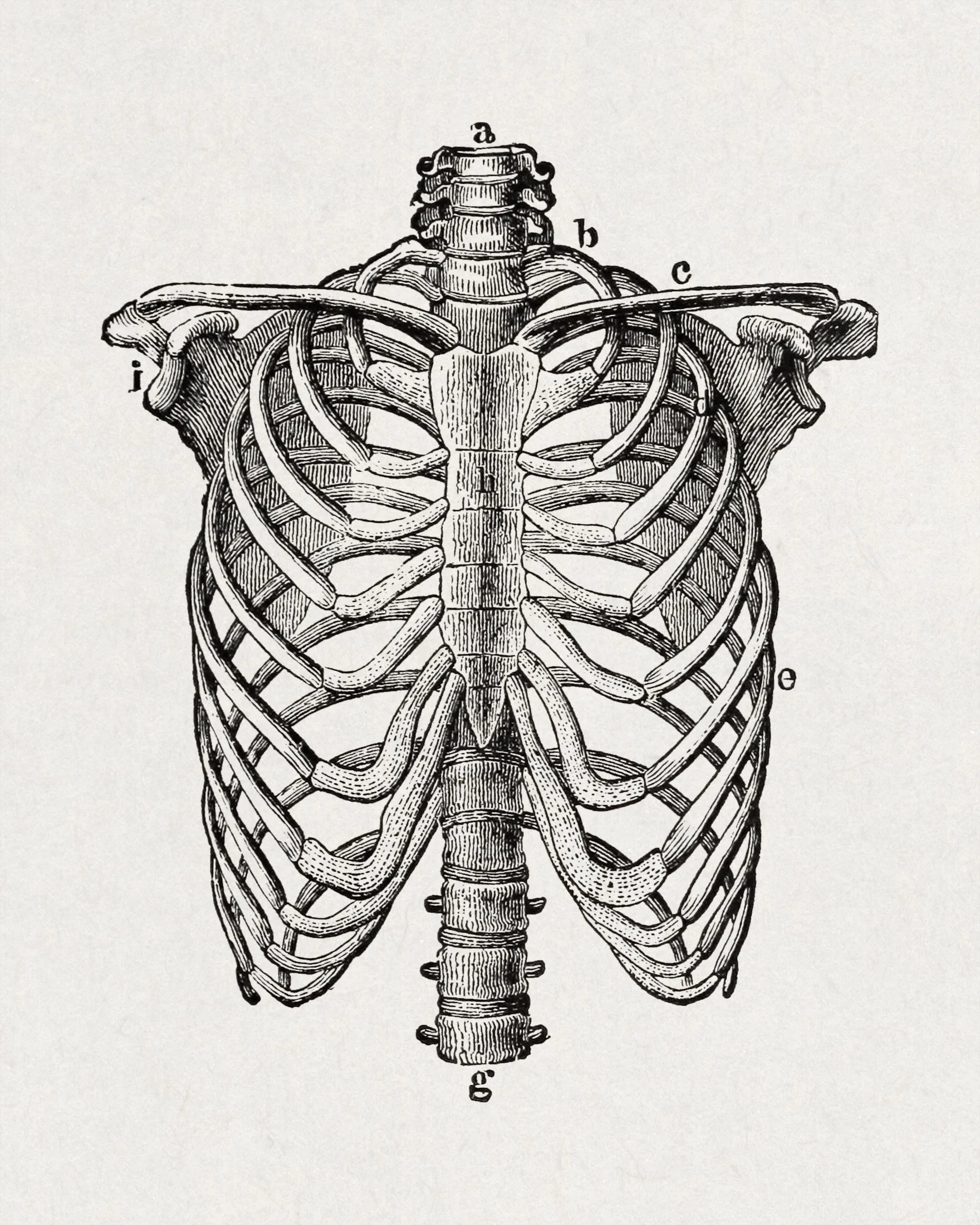
What does it mean to you to belong to the body of Christ? There’s at least one Scripture that lists out several different body parts and seems to give them a hierarchy. Feet are lower than hands (both literally and figuratively) while ears are lower than eyes. Though perhaps most importantly, it is the ears and feet that deem themselves less important, not the body.
Belonging to a group can be complicated. We often want to feel useful and purposeful. To contribute in some meaningful way to what is happening. There’s been a trend online recently of literary and film analysis that asks the question of “is the story the same if this character does not exist?” In short, does removing this person from the story create an irreparable plot hole or are they so pivotal that even suggesting to remove them completely destroys the story?
The incarnate Christ is the central figure in the gospel. Our lives, our faith, our belief is not the same without Christ. But you also need Judas, Mary, the gentile woman, and others for the gospel to be a complete telling of what it means to be in the body of Christ. Each of us has a call in our lives from God. Responding to that call helps us fulfill our vital and pivotal role in the grand scheme of what God imagines for our world. If we want to be a part of the kingdom, to live as the body of Christ, each of us will have some different things to do. What is God calling you to do? Where are you being led? It doesn’t have to be grandiose or immense to be meaningful and important.
-Rev. Beate
1 Corinthians 12:12-31

August 2025
Do you have a favorite animal? Not everyone has a favorite animal, but mine is penguins. Penguins are not mentioned by name or general description in Scripture and cannot be included in birds of the air. Thankfully, penguins aren’t the only animal that I like and collect. I also collect bees in various forms almost exclusively because of my name. This month I found myself asking the question… are there bees in the Bible? Did apiary arts exist in Jesus’ world? Would there have been beehives dotting the landscape of first century Judea?
Then I kicked myself for asking. You can’t have a land flowing with milk and honey if there are no bees! Bees are found throughout Scripture, but especially in the Old Testament. Honey is more frequent than bees and usually represents God’s abundant blessings. It’s mentioned all throughout the book of Proverbs and in several psalms as being sweet. But as Scripture goes on, the metaphor seems to disappear. During the incarnation, honey gets a few minor mentions in relation to John the Baptist’s wild ways and eating habits. Honeycomb is mentioned, once. It’s like the people stop seeing the abundant blessings of God in the world around them and only focus on the gifts associated with the incarnate Christ. I get the feeling we do the same thing as life gets and stays busy.
Are you spiritually in the wilderness, wandering, feeling lost and alone? Or are you in the promised land, a place flowing with milk and honey? What are some of God’s blessings in your life?
-Rev. Beate